Context of the Vandalism Incident
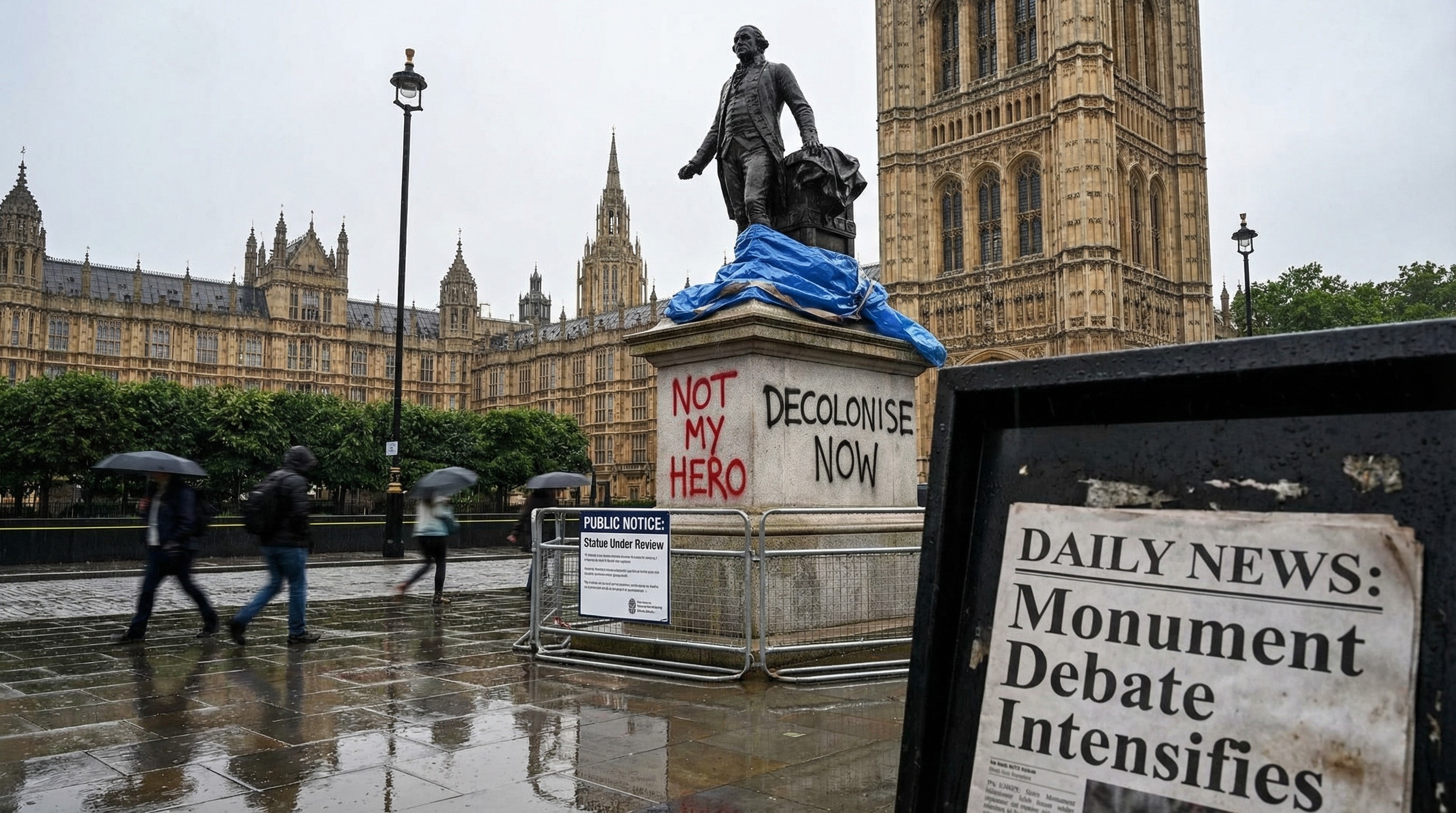
A statue of a former UK Prime Minister located at Westminster was recently defaced with slogans in red paint. This act of vandalism has reignited discussions surrounding the preservation and significance of public monuments, particularly those depicting historical figures with controversial legacies.
Public Monuments Under Scrutiny
The defacement of the statue is not an isolated incident, but part of a broader trend where public monuments worldwide are being re-evaluated. In recent years, statues representing historical figures have come under increased scrutiny, often due to their associations with colonialism, slavery, or other contentious aspects of history. This has led to a wave of protests and acts of vandalism, as well as calls for the removal or re-contextualization of certain monuments.
Historical Figures and Contemporary Values
The debate over public monuments often centers on how societies choose to honor historical figures whose actions may conflict with contemporary values. Supporters of preserving such statues argue that they serve as important historical markers and educational tools. However, critics contend that they can perpetuate harmful legacies and fail to represent the diverse narratives of history.
Implications for Policy and Society
The vandalism at Westminster raises important questions about how societies should address the complex legacies of historical figures. It challenges policymakers, historians, and the public to consider how to balance historical preservation with evolving social values. This incident may prompt further policy discussions on how to handle public monuments that are considered offensive or divisive.
Future Outlook for Public Monuments
As debates continue, the future of public monuments remains uncertain. Some cities have opted to remove controversial statues, while others have chosen to add plaques or exhibits that provide additional context. The incident at Westminster is likely to contribute to ongoing conversations about how best to represent history in public spaces, ensuring that monuments reflect a society's values and promote inclusive narratives.