Union Membership on the Rise
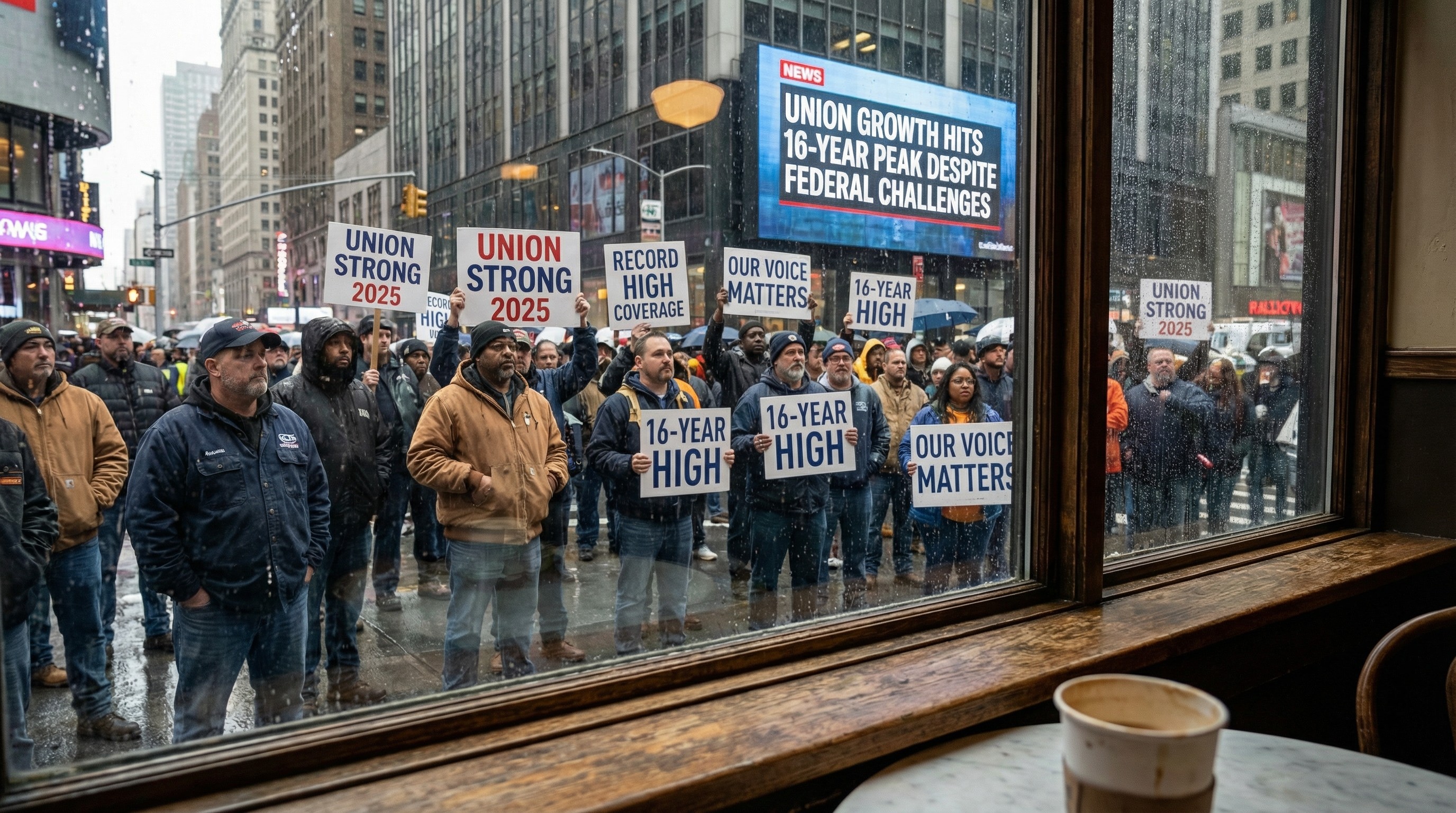
In 2025, union coverage in the United States reached its highest level in 16 years, as reported by the Bureau of Labor Statistics. Approximately 16.5 million workers were covered under union contracts, marking an increase from 16 million in 2024. This growth reflects a broader trend of workers seeking union membership, with 14.7 million individuals identified as union members in 2025, up from 14.2 million in the previous year.
Federal Challenges to Collective Bargaining
This increase in union coverage occurred despite significant challenges posed by the federal government. The Trump administration made concerted efforts to dismantle collective bargaining agreements affecting tens of thousands of federal employees. These attempts were part of a broader strategy to reduce the influence of unions within the federal workforce, which has historically been a stronghold for organized labor.
Historical Context and Significance
The rise in union coverage is significant when considering the historical context of labor relations in the U.S. Union membership has been on a general decline for decades, largely due to shifts in the economy, such as the rise of the service sector and a decrease in manufacturing jobs. This recent increase suggests a potential shift in worker sentiment and a renewed interest in collective bargaining as a means to secure better working conditions and benefits.
Implications for the Labor Market
The growth in union membership and coverage has broader implications for the U.S. labor market. Unions have traditionally played a crucial role in advocating for workers' rights, including fair wages, safe working conditions, and reasonable work hours. An increase in union influence could lead to more robust labor negotiations and potentially impact wage growth and job security across various sectors.
Outlook and Future Developments
Looking ahead, the trend of increasing union coverage could continue if workers increasingly view union membership as a viable path to improved employment conditions. However, the political landscape remains a critical factor, with future administrations potentially influencing the trajectory of union power. The ongoing dialogue between labor organizations and policymakers will likely shape the future of union influence in the U.S. workforce.