
Background to the Student Loan Protests
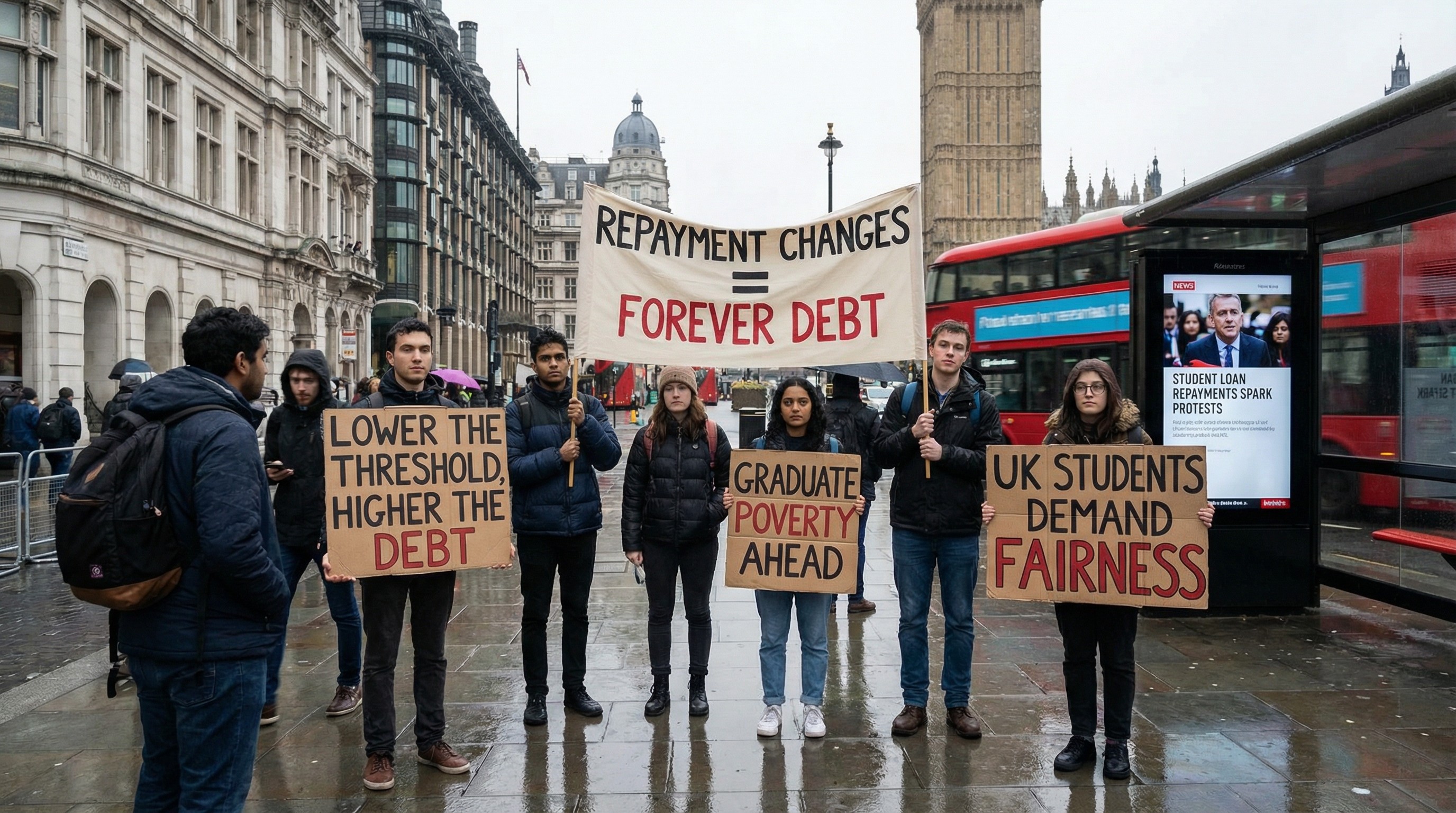
In a demonstration that captured significant attention outside the Houses of Parliament, members of the National Union of Students (NUS) gathered to protest recent changes in the student loan repayment system. The protestors, dressed in shark costumes and masks resembling the Chancellor of the Exchequer, aimed to spotlight the government's decision to freeze the income threshold at which graduates begin repaying their student loans. This decision, announced in the autumn budget, has sparked widespread concern among students and graduates about the increasing financial burden of higher education.
Details of the Government's Loan Repayment Policy
The policy freezing the repayment threshold means that graduates will start repaying their loans once they earn above a certain income level, which will not rise with inflation for the foreseeable future. This change effectively increases the amount of money that graduates will have to repay each month, as their incomes rise over time without a corresponding increase in the threshold. Critics argue that this measure disproportionately affects lower-income graduates and those entering the workforce during economically challenging times.
Implications for Students and Graduates
The decision to freeze the repayment threshold has broader implications for the financial stability of recent graduates. Many students already face significant debt upon leaving university, and the prospect of increased monthly repayments adds to their financial pressures. This situation is exacerbated by the current economic climate, where inflation and living costs are rising, making it harder for young professionals to manage their finances effectively. The NUS and other advocacy groups argue that the policy could deter potential students from pursuing higher education due to fears of unmanageable debt.
Government's Rationale and Response
The government defends the policy as a necessary measure to ensure the sustainability of the student loan system. By maintaining the current threshold, officials argue that it helps manage the fiscal impact of student loans on the national budget. However, this rationale has not quelled the discontent among students and education advocates, who feel that the policy prioritizes fiscal considerations over the financial well-being of graduates. The government's stance has prompted calls for a comprehensive review of the student loan system to address these concerns.
Outlook and Future Developments
The protest outside Parliament is part of a broader movement calling for reforms in the student loan system. As the debate continues, stakeholders from various sectors, including education, finance, and politics, are expected to weigh in on potential solutions. The outcome of this discourse could have significant implications for the future of higher education funding in the UK. Observers will be watching closely to see if the government will reconsider its position or introduce new measures to alleviate the financial burden on students.