
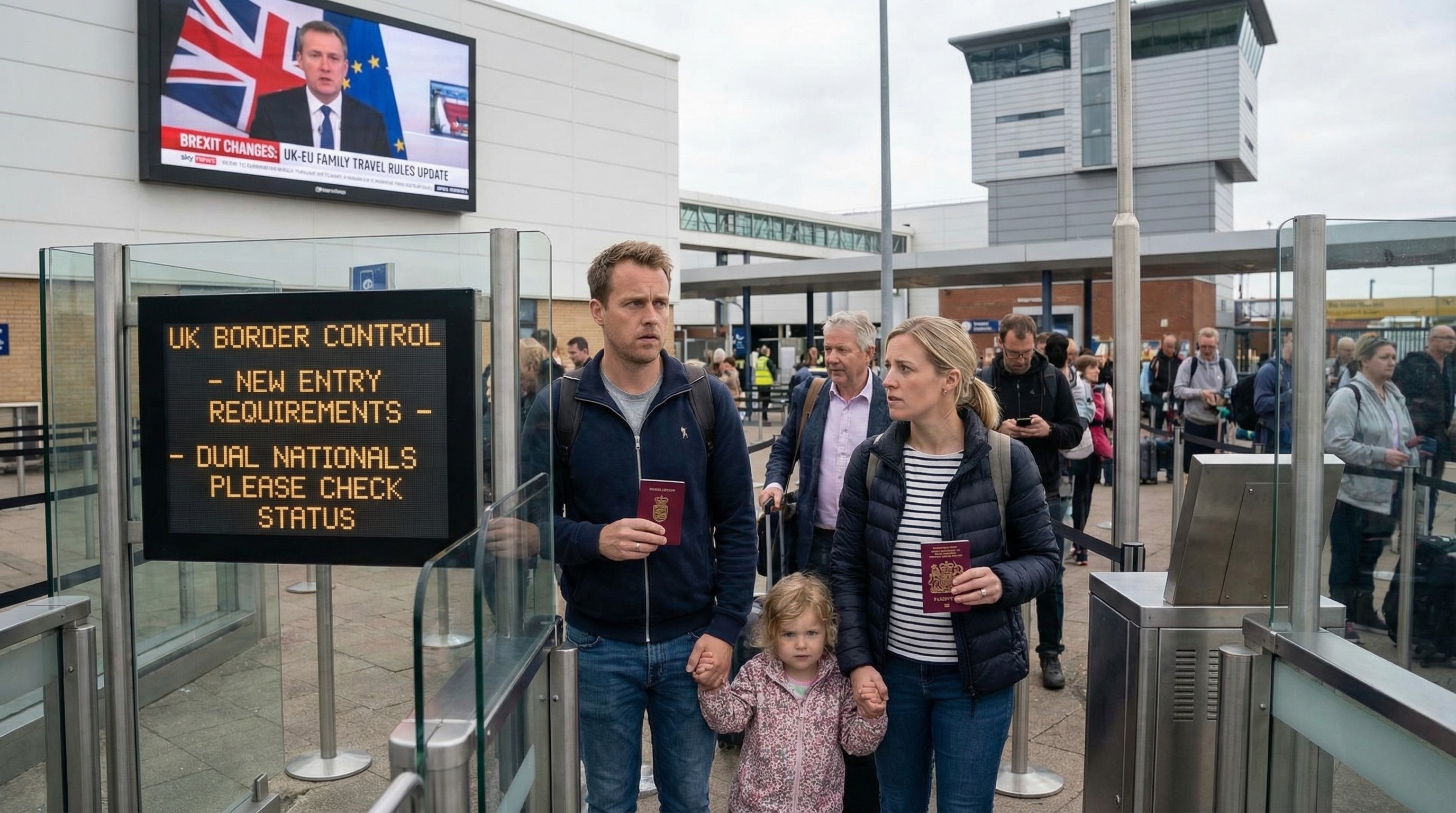
UK Border Policy Changes Impact Dual Nationals
Recent changes to UK border control regulations have raised concerns among dual-national families, particularly those with British and Danish ties. The new rules, introduced by the Home Office, have sparked fears of family separation during international travel. This development underscores the complexities faced by dual nationals navigating evolving immigration policies.
Family's Ordeal Highlights Policy Gaps
James Scrivens, a British citizen, and his Danish wife, Sara, recently encountered these challenges firsthand. The couple, residents of Wales, were visiting relatives in Norway and Denmark with their children when they became aware of the new regulations. The family fears that their children, holding dual nationality, could be stranded at Copenhagen airport due to the need for updated travel documents.
Understanding the New Regulations
The Home Office's updated rules require dual nationals to present a valid UK passport when entering the country. This change has particularly affected families with children who may not have the necessary documentation readily available, potentially leading to temporary separations as parents return to the UK to apply for passports.
Broader Implications for Dual Nationals
The situation faced by the Scrivens family is not isolated. Many dual-national families could find themselves in similar predicaments, especially those unaware of the recent changes. The new rules highlight the need for clear communication from government agencies to ensure families are adequately prepared for travel.
Outlook and Recommendations
As families like the Scrivens navigate these regulatory changes, there is a growing call for more comprehensive guidance and support from the Home Office. Ensuring that dual nationals are informed of their rights and responsibilities is crucial to preventing unintended separations and ensuring smooth travel experiences. The situation also underscores the broader need for policies that consider the unique circumstances of dual-national families in an increasingly globalized world.