Introduction to Tokenized Debt
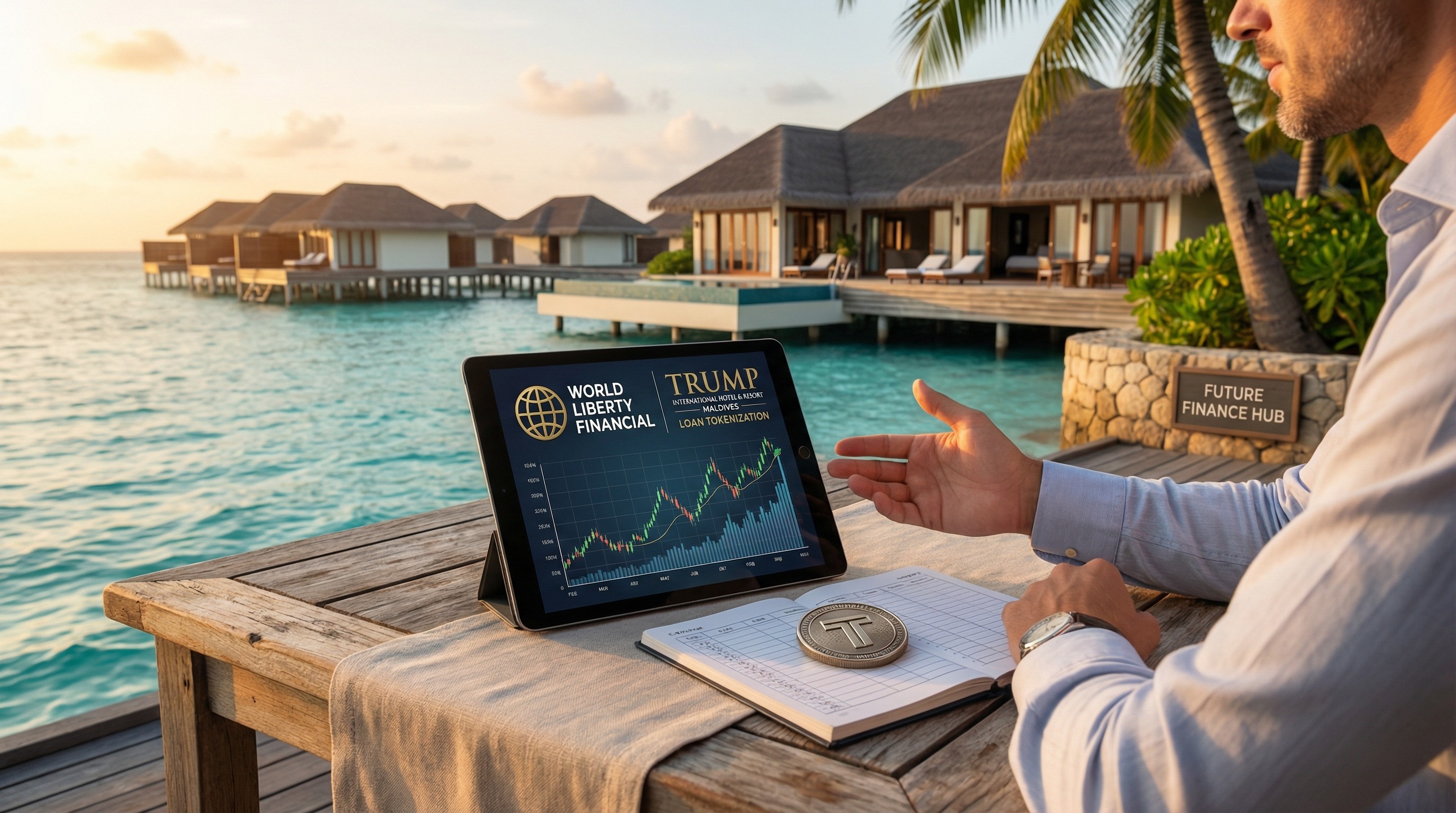
In a significant development within the cryptocurrency and financial sectors, World Liberty Financial (WLFI), a firm linked to former U.S. President Donald Trump, has announced plans to tokenize loan-revenue interests associated with the Trump International Hotel and Resort Maldives. This initiative aims to offer investors exposure to projected interest payments linked to the project's financing, rather than direct ownership of the property.
Understanding the Tokenization Process
Tokenization, once a niche concept within the crypto community, has evolved into a regulated approach for packaging and distributing private-market products, particularly in the realm of private credit. The WLFI deal exemplifies this trend, converting future debt service into a digital security. This approach allows investors to buy into the interest payments of a resort loan, rather than acquiring any tangible part of the resort itself.
The structure of this offering is akin to traditional structured credit products, albeit with a digital twist. The tokens, hosted on a blockchain, manage issuance, ownership records, and distribution under rules for accredited investors. This method introduces familiar risks associated with structured credit, such as repayment hierarchies and borrower stress scenarios.
The Role of Regulation and Compliance
WLFI's collaboration with Securitize, a firm specializing in compliance and distribution, ensures that the tokenization process adheres to regulated digital securities infrastructure. This partnership underscores the shift from crypto novelty to structured credit, emphasizing the importance of disclosures and fee structures.
By targeting accredited investors and utilizing regulated infrastructure, WLFI positions its tokens as a modern private placement, distinct from freely traded coins on public exchanges. This regulatory framework is crucial, especially in a political climate sensitive to foreign capital and the monetization of presidential brands through token sales.
Economic Implications and Brand Influence
The Trump name significantly influences the distribution and reception of this financial product. The brand's association is expected to expedite distribution and reduce buyer acquisition costs, transforming a technically complex product into one with broader appeal beyond traditional private-credit circles.
Financially, the tokenization process generates revenue at issuance, separate from the yield investors anticipate from the resort's future interest payments. A Trump family-owned entity, DT Marks DEFI, is set to receive a substantial portion of the revenue from token sales, highlighting the economic model's reliance on branding and distribution.
Future Outlook and Challenges
The completion target for the Trump International Hotel and Resort Maldives is set for 2030, introducing a layer of timeline risk. Investors must consider construction, financing, and macroeconomic risks, alongside the traditional questions pertinent to structured credit products.
This venture could potentially normalize the marketing of tokenized private credit through high-profile brands, attract increased scrutiny of token issuance economics, and accelerate the adoption of regulated tokenization platforms. As the financial landscape evolves, this project could serve as a benchmark for how regulated tokenization can scale in politically charged contexts.