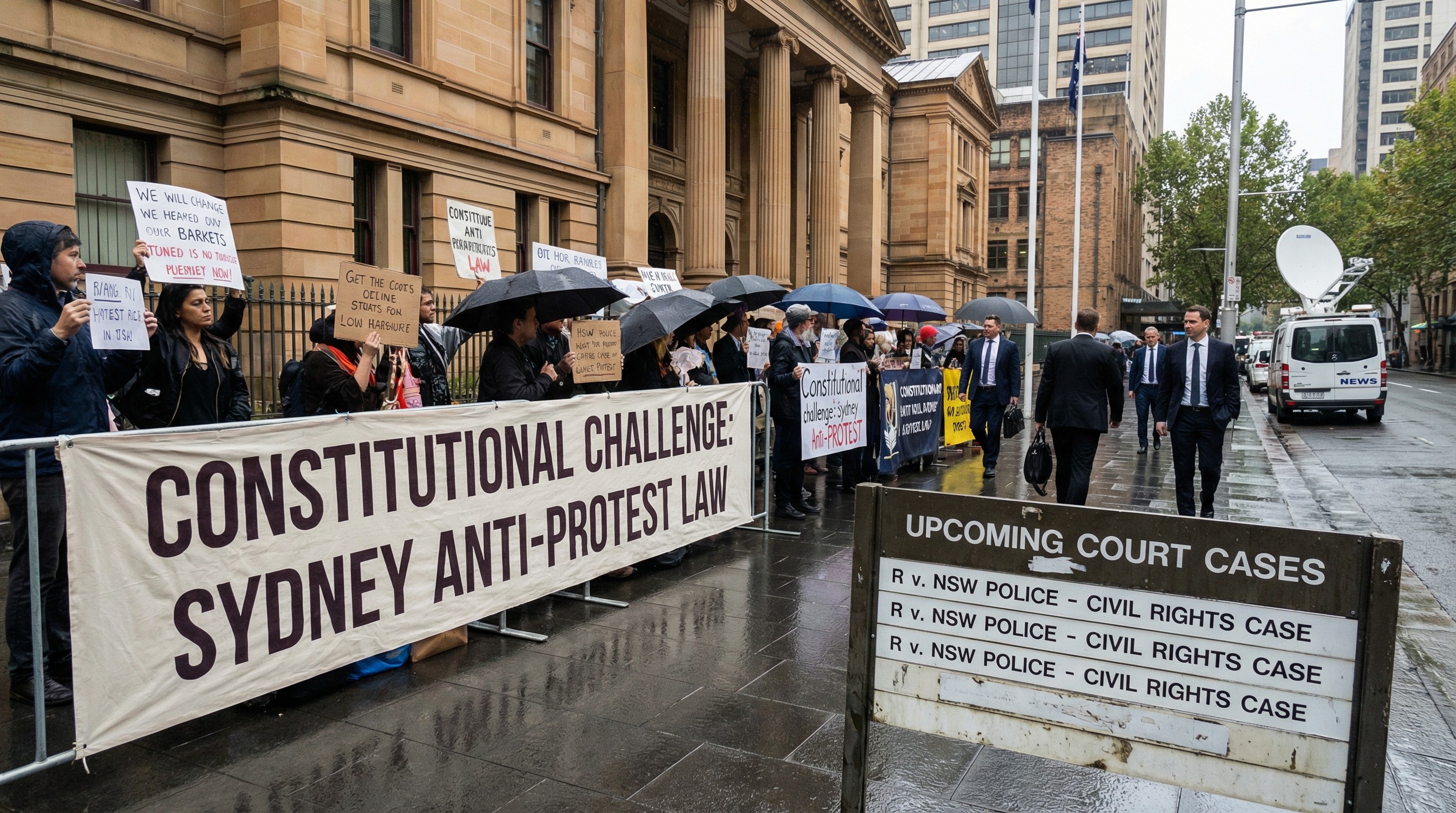
The New South Wales (NSW) court of appeal is currently deliberating a significant constitutional challenge against a controversial law enacted by the Minns government. This law, which effectively bans marches in Sydney's Central Business District (CBD), has sparked a heated debate over its implications for social cohesion and civil rights.
Background of the Anti-Protest Law
The law in question was introduced in response to what authorities described as a heightened threat following the Bondi terror incident. It was designed to prevent large-scale protests in Sydney's CBD, aiming to enhance public safety and maintain social order. However, the sweeping nature of the ban has drawn criticism from various quarters, including civil rights groups and legal experts.
Legal Arguments and Constitutional Challenge
Lawyers representing three protest groups have mounted a robust challenge against the law, arguing that it undermines its stated objective of promoting social cohesion. They contend that the law infringes on fundamental democratic rights, such as freedom of assembly and expression, which are crucial for a healthy, functioning society. The legal team posits that the government must demonstrate that the prohibition of all protests was a rational measure to achieve its goals.
Implications for Civil Rights and Social Cohesion
The case has broader implications for civil rights in Australia. Critics argue that such laws could set a precedent for restricting public demonstrations, which are a vital part of democratic discourse. The balance between ensuring public safety and preserving civil liberties is a delicate one, and this case could influence how similar situations are handled in the future.
Outlook and Potential Impact
The outcome of this legal battle will likely have significant ramifications for both the NSW government and protest groups. If the court finds the law unconstitutional, it could lead to a reevaluation of how public safety measures are implemented in relation to civil liberties. Conversely, if the law is upheld, it might embolden other jurisdictions to adopt similar measures, potentially reshaping the landscape of public protests in Australia.
As the court deliberates, the eyes of both legal experts and civil rights advocates are firmly fixed on the proceedings, understanding that the decision could set a critical precedent for the balance between security and freedom in democratic societies.