Historic Launch Complex 39A Undergoes Another Transformation
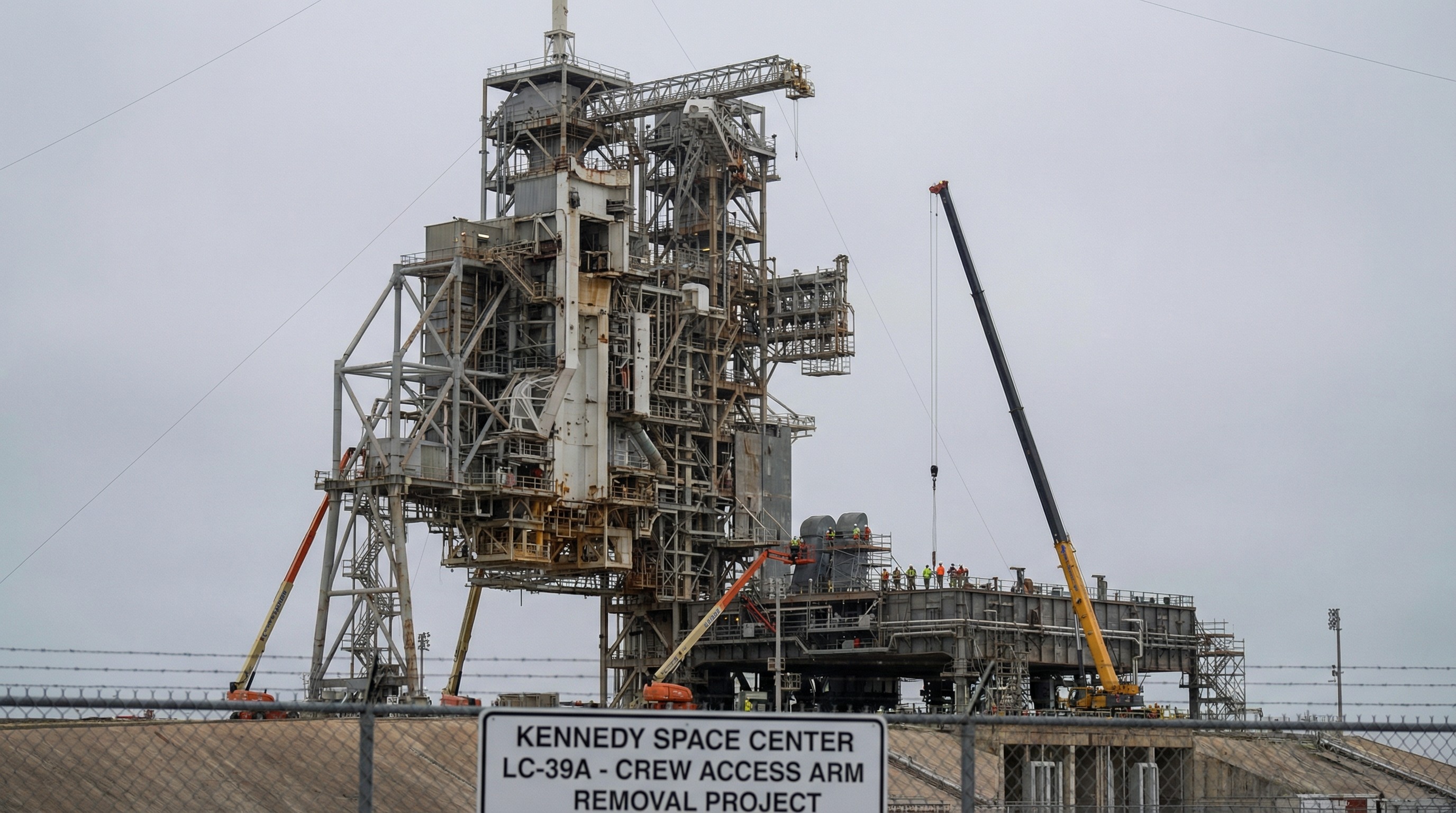
Launch Complex 39A at NASA's Kennedy Space Center in Florida has been a pivotal site for American space exploration for over six decades. Initially constructed in the 1960s for the Apollo program, the site has since adapted to serve various missions, including the Space Shuttle program and, most recently, SpaceX's Falcon launches. The latest transformation occurred with the removal of the Crew Access Arm, a critical component for astronaut boarding.
The Evolution of Launch Complex 39A
Originally designed for the Saturn V rockets that propelled astronauts toward the Moon, Launch Complex 39A has seen several significant changes over the years. Following the conclusion of the Apollo missions, the site was repurposed for the Space Shuttle program, which operated from 1981 until the final shuttle launch in 2011. In 2014, NASA leased the site to SpaceX, heralding a new era of commercial spaceflight.
SpaceX's Role and Recent Developments
SpaceX began utilizing the site in 2017, launching its Falcon 9 and Falcon Heavy rockets. In 2018, the company installed a new Crew Access Arm to facilitate the boarding of astronauts onto the Crew Dragon spacecraft. This installation was crucial for the company's first crewed test flight in 2019 and subsequent missions starting in 2020. The recent removal of this arm marks another step in the site's ongoing evolution under SpaceX's stewardship.
Implications for Future Missions
The removal of the Crew Access Arm signals potential changes in SpaceX's operations at Launch Complex 39A. While details about the reasons for the removal or future plans have not been disclosed, such updates often indicate upcoming infrastructure changes or new mission requirements. As SpaceX continues to expand its capabilities, including the development of the Starship vehicle, adaptations to existing infrastructure are essential.
Looking Ahead: The Future of Launch Complex 39A
As one of the most iconic launch sites in the world, Complex 39A's adaptability is a testament to the dynamic nature of space exploration. With SpaceX at the helm, the site is poised to support a new generation of missions, potentially including those beyond Earth's orbit. The continued evolution of this historic site underscores the ever-changing landscape of space exploration and the critical role of public-private partnerships in advancing technology and exploration goals.