Massive Sewage Spill Leads to Political Tensions
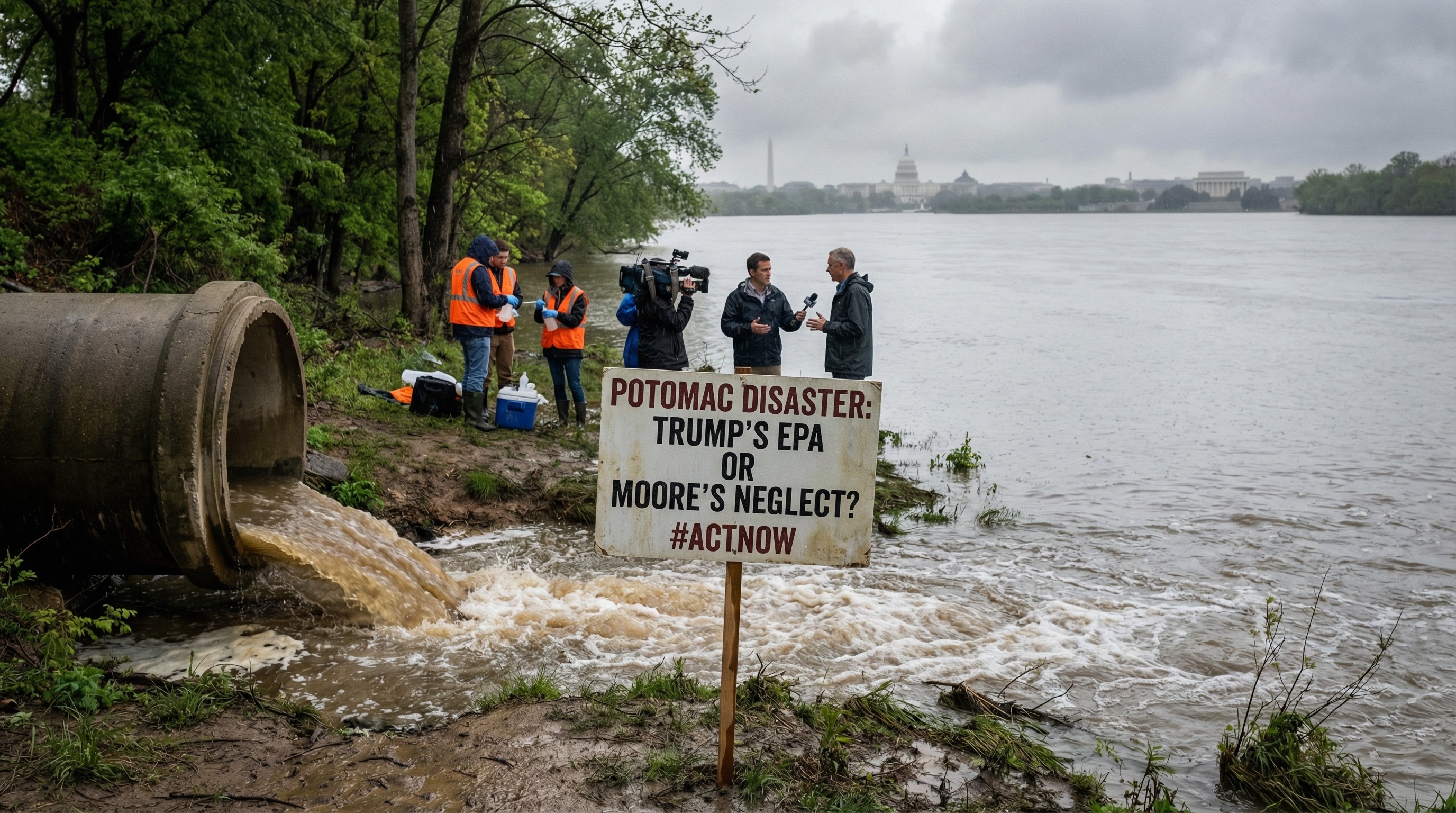
A significant sewage spill into the Potomac River has led to a heated exchange between President Donald Trump and Maryland Governor Wes Moore. The incident, which occurred on January 19, has been described as one of the most substantial raw sewage spills in U.S. history, prompting a blame game over the management and response to the crisis.
President Trump criticized local Democratic leaders, particularly Governor Moore, for what he termed 'gross mismanagement' of the situation. In a post on Truth Social, Trump claimed that local authorities were unable to handle the ecological disaster adequately, stating that the federal government had to step in to address the crisis.
Federal and Local Responsibilities Under Scrutiny
The sewage spill has spotlighted the responsibilities and coordination between federal and local authorities in managing environmental emergencies. Governor Moore's office responded to the President's accusations, asserting that the federal government had failed to act promptly over the past four weeks. A spokesperson for Moore emphasized that the broken sewage pipe is managed by DC Water, an independent utility established by both federal and local D.C. governments.
DC Water has been utilizing bypass pumps to mitigate further spills into the Potomac River while working on a permanent solution. However, repair efforts have been delayed due to a large rock blockage encountered in the aging pipeline, extending the timeline by an additional four to six weeks.
Environmental and Public Health Impacts
The spill has raised significant environmental and public health concerns. Authorities have urged the public to avoid the affected area, advising against activities such as fishing, boating, and allowing pets near the river. Despite the spill, officials have assured that the area's drinking water, which is sourced upstream, remains safe for consumption.
The ecological impact of the spill is yet to be fully assessed, but the incident highlights the vulnerabilities of aging infrastructure and the potential for environmental disasters. The Potomac River, a vital waterway in the region, supports diverse ecosystems and is a crucial resource for surrounding communities.
Implications for Future Policy and Infrastructure
This incident underscores the need for robust infrastructure maintenance and effective emergency response strategies. It also highlights the importance of clear communication and cooperation between federal and local authorities in managing environmental crises.
The political fallout from the spill may influence future policy decisions regarding infrastructure investment and environmental protection. As the situation unfolds, it serves as a reminder of the critical need for proactive measures to prevent similar incidents and protect vital natural resources.
Outlook and Next Steps
As cleanup efforts continue, the focus will likely shift towards long-term solutions to prevent future spills and address the underlying causes of the infrastructure failure. The incident may prompt discussions on the allocation of federal and state resources to support infrastructure upgrades and environmental safeguards.
In the meantime, both federal and local governments will need to work collaboratively to ensure a swift resolution to the current crisis and mitigate any further environmental damage. The outcome of this incident may set a precedent for how similar situations are handled in the future, emphasizing the need for coordinated and effective governance.