
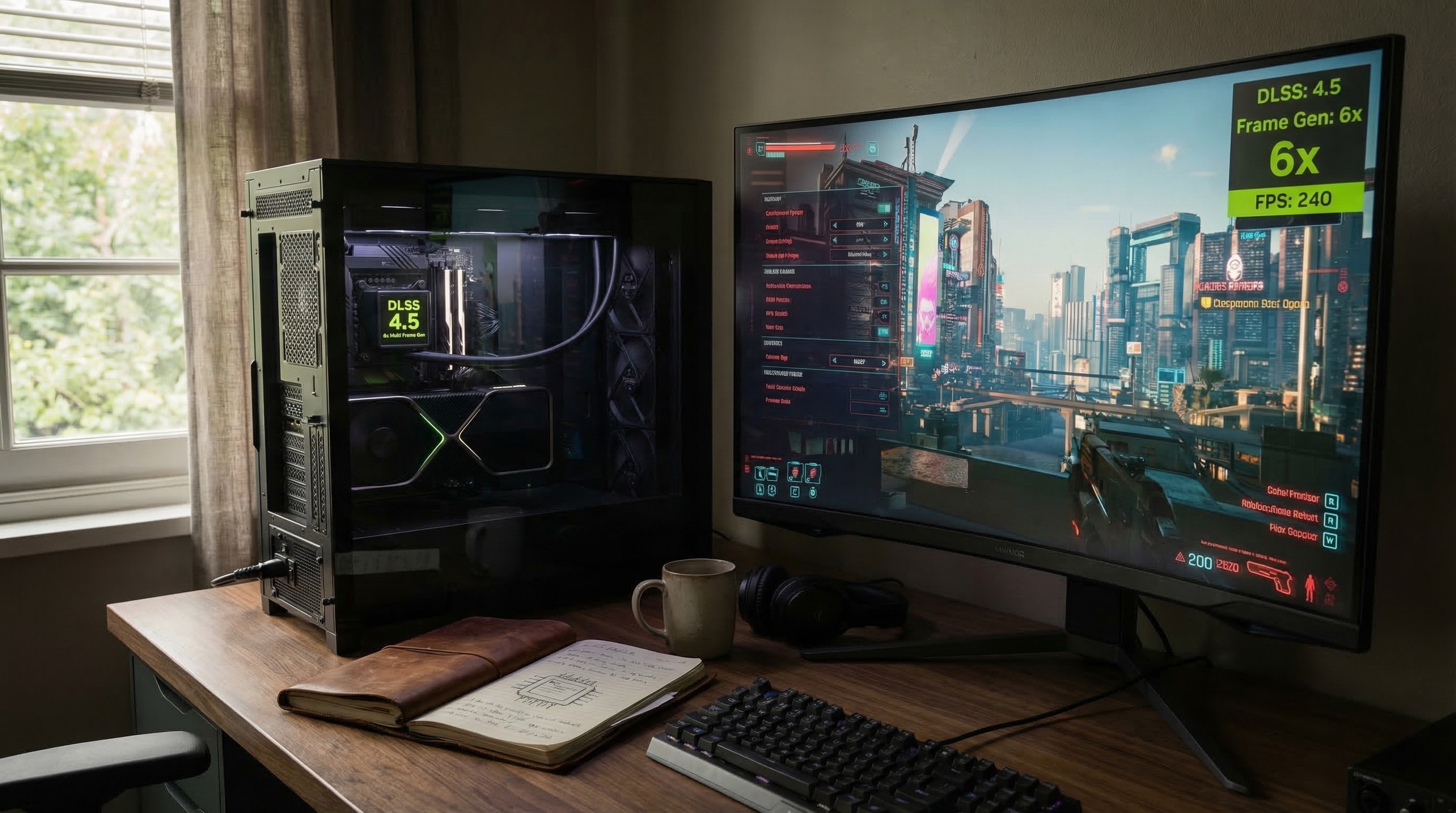
Nvidia Unveils DLSS 4.5 with Advanced Frame Generation
In a significant development for the gaming industry, Nvidia has announced the release of its latest Deep Learning Super Sampling (DLSS) technology, version 4.5. This update, set to be available from March 31, promises to enhance gaming experiences for users equipped with RTX 50-series GPUs. The standout feature of DLSS 4.5 is its ability to generate five additional frames for every single natively rendered frame, a substantial improvement over previous iterations.
Understanding DLSS and Its Evolution
DLSS is a technology developed by Nvidia that leverages artificial intelligence to upscale lower-resolution images to a higher resolution, effectively improving visual fidelity without the heavy computational load typically required. Since its introduction, DLSS has been instrumental in allowing gamers to enjoy high-quality graphics and smooth gameplay without needing the most powerful hardware. The evolution from DLSS 1.0 to 4.5 reflects Nvidia's commitment to pushing the boundaries of what is possible in real-time rendering.
Key Features of DLSS 4.5
The most notable advancement in DLSS 4.5 is the introduction of 6x Multi Frame Generation. This feature enables the generation of five additional frames for every single frame rendered, effectively multiplying the frame rate by up to six times. This is a significant leap from the previous maximum of three additional frames in DLSS 4. The technology aims to provide smoother and more responsive gaming experiences, particularly beneficial in fast-paced games where frame rate consistency is crucial.
Additionally, Nvidia is introducing Dynamic Frame Generation for the 50-series GPUs. This feature allows the system to automatically adjust the frame generation multiplier to achieve the target frame rate for a game or match the display's refresh rate, optimizing performance dynamically based on the user's system capabilities and gaming preferences.
Implications for the Gaming Industry
The release of DLSS 4.5 is poised to have a significant impact on the gaming industry. With the ability to produce higher frame rates and improved image quality, game developers can push the limits of visual realism without sacrificing performance. This could lead to more immersive and visually stunning gaming experiences, attracting a broader audience and potentially driving sales of RTX 50-series GPUs.
Moreover, the enhanced capabilities of DLSS 4.5 could influence the design and development of future games. Developers may feel encouraged to create more graphically intensive games, knowing that players equipped with Nvidia's latest technology can enjoy these games at optimal settings.
The Future of Gaming Technology
Nvidia's advancements in DLSS technology highlight a broader trend in the gaming industry towards leveraging AI and machine learning to enhance performance and visual quality. As these technologies continue to evolve, they are likely to play an increasingly central role in game development and hardware design.
Looking ahead, the success of DLSS 4.5 could spur further innovations in AI-driven rendering technologies, potentially setting new standards for what gamers can expect from their hardware. This development not only underscores Nvidia's leadership in the GPU market but also sets the stage for future advancements that could redefine the gaming landscape.