
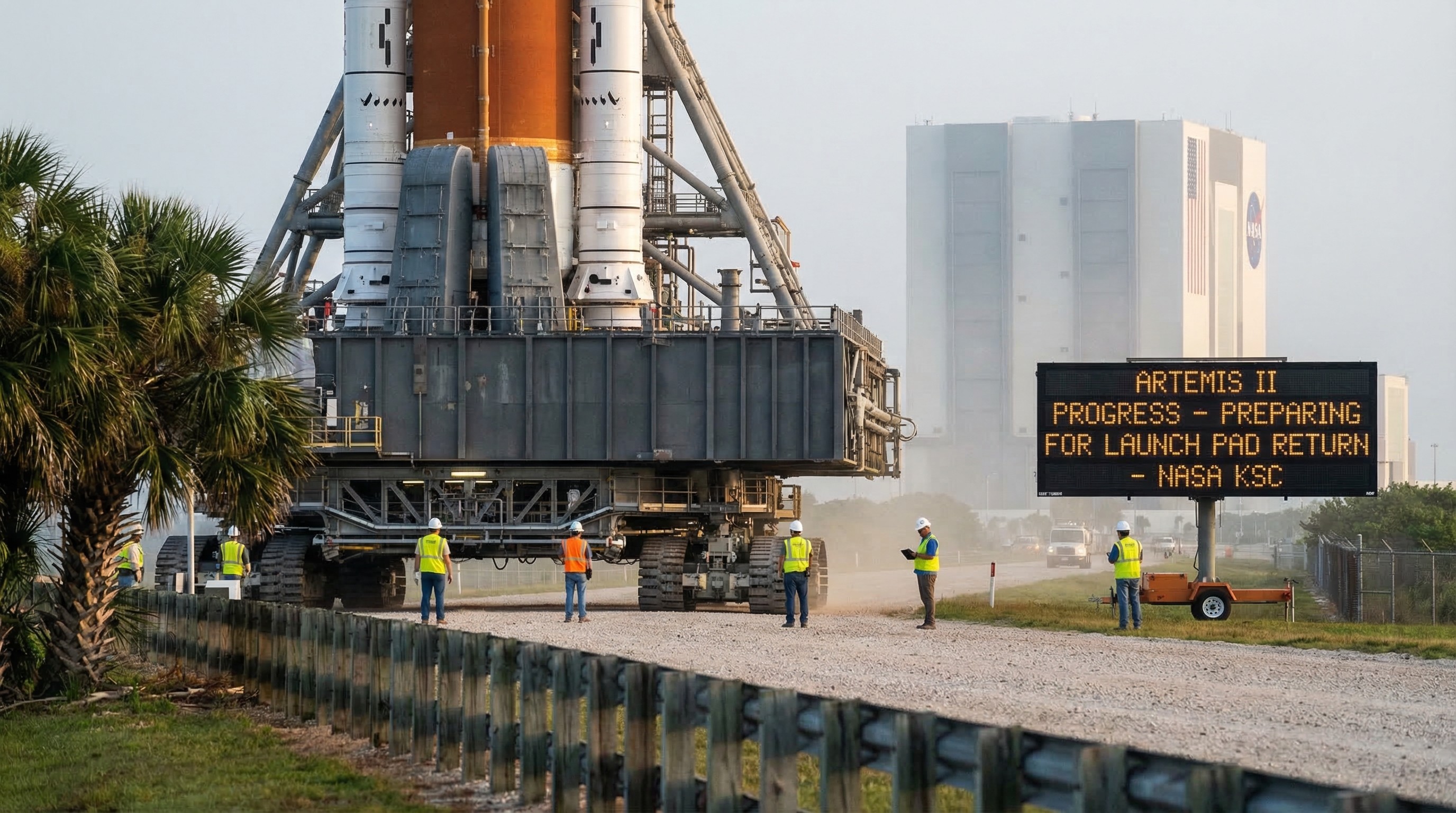
NASA Overcomes Technical Hurdles for Artemis II
NASA has successfully addressed the technical challenges that temporarily halted the Artemis II mission's progress. The mission, which aims to pave the way for future lunar exploration, faced setbacks due to a series of technical issues with the rocket. However, NASA officials have confirmed that the problems have been resolved, and preparations are underway to return the rocket to the launch pad at the Kennedy Space Center in Florida.
Key Issues and Their Resolution
The Artemis II mission, a critical component of NASA's plan to return humans to the Moon, encountered a significant hurdle earlier this year. The Space Launch System (SLS) rocket, standing at 322 feet tall, was removed from the launch pad after a hydrogen leak was detected. This issue was initially addressed during a fueling test on February 21, which involved loading the rocket with super-cold propellants. The test was deemed successful as the leak appeared to be resolved.
However, a new problem emerged shortly thereafter, involving the inability to flow helium into the rocket's upper stage. Unlike the hydrogen leak, this issue required the rocket to be moved to the Vehicle Assembly Building (VAB) for repairs, as the umbilical lines leading to the upper stage are only accessible within this facility.
Implications for NASA's Lunar Ambitions
The resolution of these technical issues is crucial for NASA's Artemis program, which represents a significant step towards sustainable lunar exploration. Artemis II is set to be the first crewed mission to orbit the Moon since the Apollo era, serving as a precursor to future missions that will eventually establish a long-term human presence on the lunar surface.
The challenges faced by the Artemis II mission highlight the complexities involved in modern space exploration. Each technical setback provides valuable lessons that can enhance the reliability and safety of future missions. NASA's ability to troubleshoot and resolve these issues underscores the agency's commitment to advancing human spaceflight.
Looking Ahead: Timeline and Expectations
With the technical issues now resolved, NASA is cautiously optimistic about moving forward with the Artemis II mission. Officials have indicated that it will take a few weeks before the rocket is ready to return to the launch pad. This timeline allows for thorough testing and verification to ensure all systems are functioning as expected.
The successful launch of Artemis II will mark a significant milestone in NASA's Artemis program, reinforcing the agency's leadership in space exploration and its dedication to pushing the boundaries of human achievement. As the world watches, the upcoming mission will not only rekindle the spirit of lunar exploration but also lay the groundwork for future endeavors, including missions to Mars.