
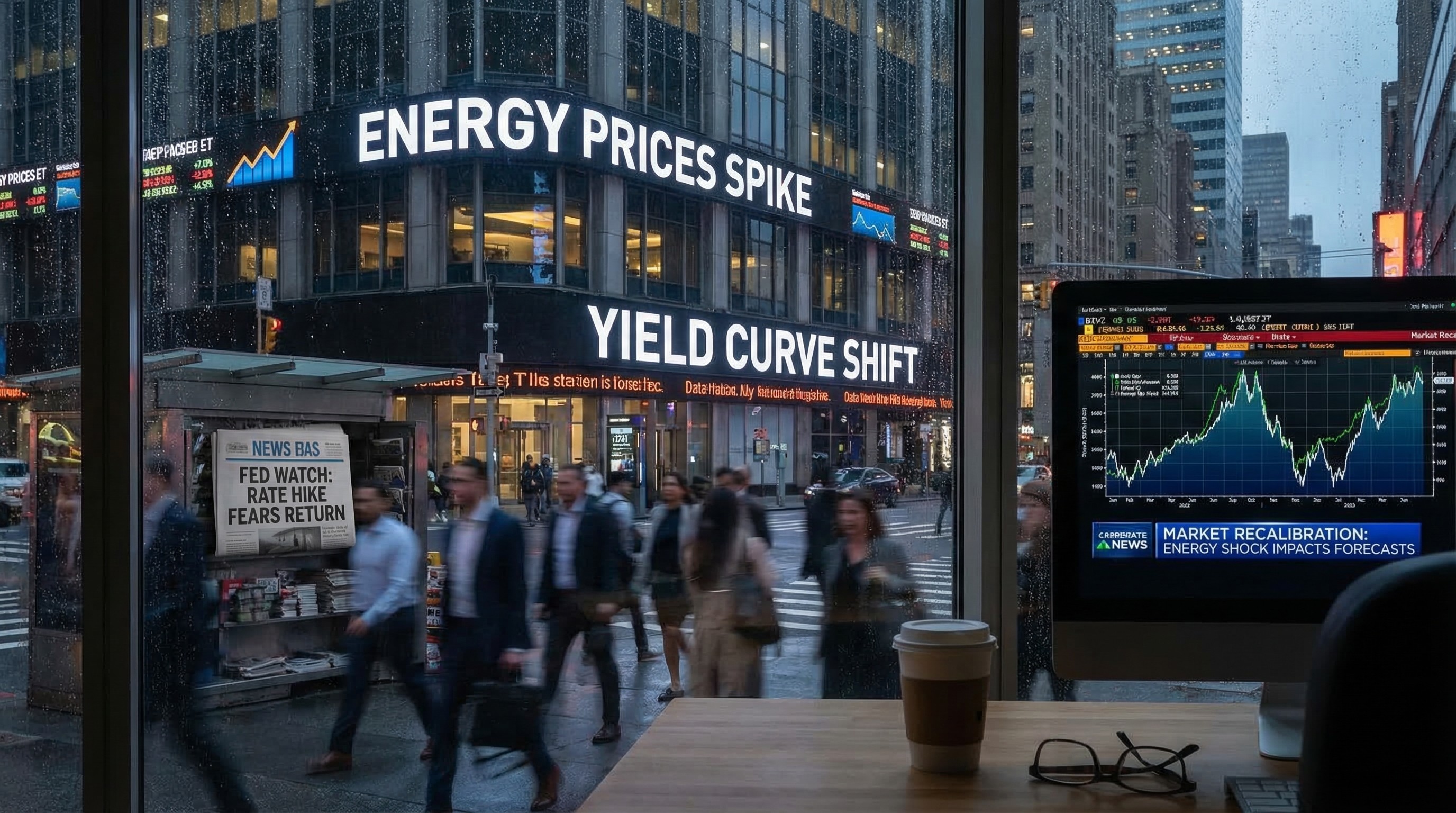
Investor Sentiment Shifts Amid New Economic Pressures
Global financial markets are experiencing heightened volatility as investors reassess their expectations for central bank rate cuts. The shift in sentiment comes amid a new energy shock that is raising concerns about inflationary pressures and economic stability. This development has led to a recalibration of market strategies, with a growing number of investors now anticipating that any potential rate cuts may be pushed back to September or later.
Inflation Concerns Resurface
Inflation, a persistent concern for global economies, is once again at the forefront of market discussions. According to Smriti Popenoe, Co-CEO of Dynex Capital, the current inflationary pressures may prove to be "transient". However, the market's response indicates a heightened sensitivity to any signs of rising prices, particularly those driven by energy costs. As energy markets grapple with supply disruptions and price spikes, the potential for sustained inflation could influence central bank policies.
Rate Hike Probabilities Increase
The possibility of rate hikes is becoming a more prominent consideration for investors. Market dynamics are reflecting an increased probability of rate hikes as central banks may be compelled to act against inflationary pressures. This shift in expectations is influencing investment strategies and asset allocations, as market participants brace for potential changes in monetary policy.
Energy Shock: A Catalyst for Change
The latest energy shock, characterized by fluctuating supply and demand dynamics, is acting as a catalyst for broader economic shifts. Energy prices have a direct impact on production costs and consumer prices, thereby influencing inflation rates. This development underscores the interconnectedness of global markets and the challenges faced by policymakers in balancing growth with inflation control.
Outlook: Navigating Uncertainty
As the global economy navigates these uncertain waters, investors and policymakers alike are tasked with adapting to rapidly changing conditions. The recalibration of rate expectations highlights the fluid nature of economic forecasting and the importance of flexibility in policy responses. While the immediate future remains uncertain, the ongoing dialogue between market forces and policy decisions will be crucial in shaping economic outcomes.