
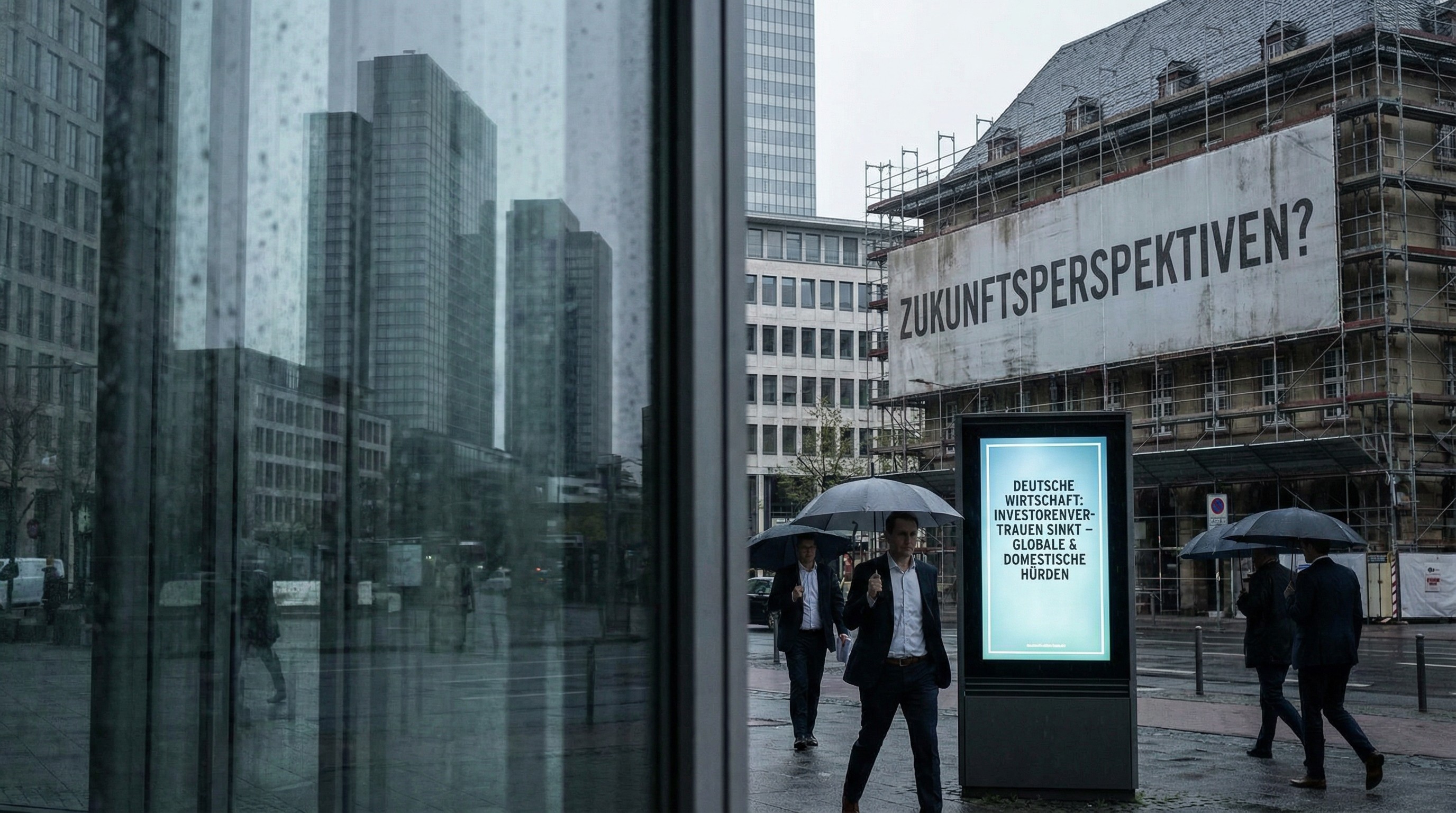
Investor Sentiment Declines in Germany
Recent data indicates a drop in investor confidence in Germany, underscoring the fragile state of the country's economic recovery. As Europe's largest economy, Germany's performance is closely watched, and this decline in confidence could have broader implications for the European Union and beyond.
Economic Recovery Faces Obstacles
Germany has been striving to rebound from the economic downturn caused by the COVID-19 pandemic. Despite efforts to stimulate growth, various factors, including global supply chain disruptions and energy crises, have posed significant challenges. The current drop in investor confidence reflects concerns about these ongoing issues and their impact on future economic stability.
Global and Domestic Factors at Play
The decline in investor sentiment is not occurring in isolation. Global uncertainties, such as geopolitical tensions and fluctuating commodity prices, have contributed to a cautious outlook among investors. Domestically, Germany is dealing with its own set of challenges, including labor shortages and inflationary pressures, which are complicating the recovery process.
Implications for the European Economy
As a key player in the European Union, Germany's economic health is vital for the region's overall stability. A sustained lack of investor confidence could slow down economic growth not only in Germany but across Europe. This scenario could lead to increased economic disparities within the EU and complicate policy responses aimed at fostering recovery.
Outlook and Future Prospects
While the current decline in investor confidence is concerning, it also presents an opportunity for policymakers to address underlying issues and reinforce economic resilience. Strategic investments in technology, infrastructure, and sustainable energy could bolster confidence and support long-term growth. Nevertheless, the path to recovery remains uncertain, demanding careful navigation through both domestic and international challenges.