
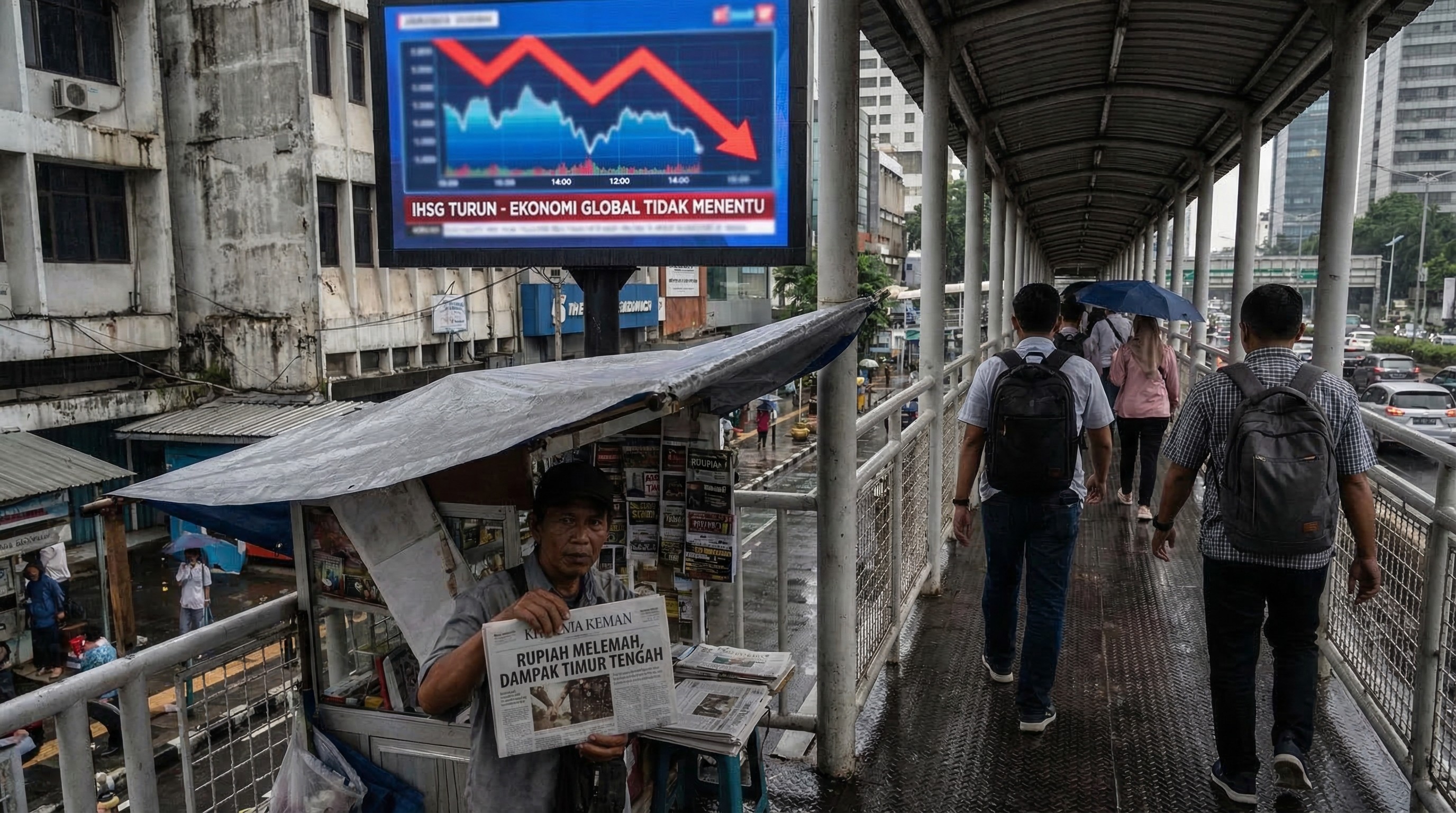
Indonesia's Market Downturn Amid Regional Tensions
Indonesia, Southeast Asia's largest economy, is grappling with a significant economic downturn as its stock market and currency experience a sharp decline. The recent escalation of conflict in the Middle East has exacerbated existing pressures on regional assets, heightening investor concerns about Indonesia's economic stability and policy direction.
Impact of Middle East Conflict on Regional Markets
The Middle East conflict has sent ripples through global financial markets, with emerging economies like Indonesia bearing the brunt. The geopolitical instability has led to a flight to safety, with investors pulling out of riskier assets in favor of more secure investments. This has resulted in a marked depreciation of the Indonesian rupiah and a decline in the Jakarta Composite Index, signaling a bearish outlook for the country's financial markets.
Underlying Concerns About Indonesia's Economy
Beyond the immediate impact of the Middle East conflict, Indonesia faces broader economic challenges. Concerns about the country's investability have been mounting due to perceived policy inconsistencies and a lack of clear economic direction. Analysts point to issues such as regulatory unpredictability and governance concerns, which have deterred foreign investment and hindered economic growth.
Global Economic Context and Indonesia's Position
Indonesia's economic struggles are not isolated but part of a wider trend affecting emerging markets. As global economic conditions remain volatile, countries like Indonesia are particularly vulnerable to external shocks. The ongoing trade tensions, fluctuating commodity prices, and the global shift towards tighter monetary policies have further complicated the economic landscape for emerging economies.
Outlook and Potential Policy Responses
In response to these challenges, Indonesian policymakers may need to consider measures to stabilize the economy and restore investor confidence. Potential strategies could include monetary policy adjustments, fiscal stimulus, and reforms aimed at improving the business environment. However, the effectiveness of these measures will depend on the government's ability to implement them swiftly and decisively.