
/
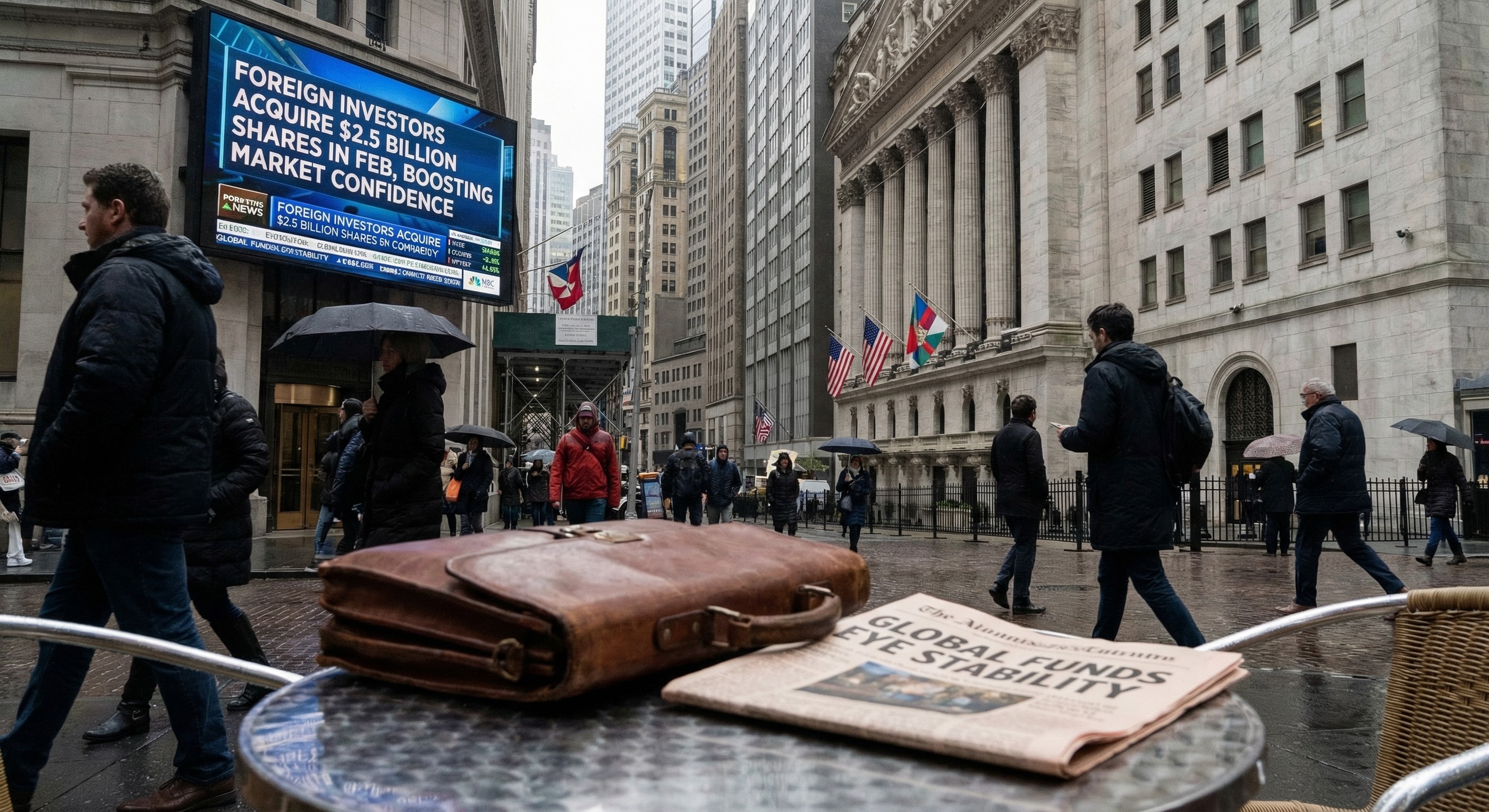
Global Investment Trends: A February Overview
In February, foreign investors made significant moves in the global financial markets, purchasing over $2.5 billion worth of shares. This influx of international capital reflects a growing confidence in market stability and potential returns, signaling a noteworthy trend in global investment behavior. This article delves into the factors driving this surge and its implications for global markets.
Factors Driving Foreign Investment
The surge in foreign investment can be attributed to several key factors. Firstly, the relative stability of certain economies and their financial markets has attracted investors seeking safe havens amidst global uncertainties. Additionally, attractive valuations and growth prospects in specific sectors have drawn attention from international investors looking to diversify their portfolios.
Moreover, favorable monetary policies and low-interest rates in many developed economies have encouraged investors to seek higher returns in emerging markets. This has led to increased capital flows into countries with promising economic outlooks and robust market fundamentals.
Implications for Global Markets
The influx of foreign capital into stock markets can have several implications. For one, it can lead to increased liquidity, which often results in more efficient price discovery and reduced volatility. This can create a more favorable environment for both local and international investors.
Furthermore, foreign investment can stimulate economic growth by providing companies with the capital needed for expansion and innovation. This, in turn, can lead to job creation and increased consumer spending, further bolstering economic performance.
However, there are also potential risks associated with such investment flows. Sudden shifts in investor sentiment or global economic conditions could lead to rapid capital outflows, which might destabilize markets and economies reliant on foreign investment.
Outlook for Future Investment Activity
Looking ahead, the trend of foreign investment is likely to continue, driven by ongoing economic recovery efforts and the pursuit of higher returns. Investors are expected to remain vigilant, closely monitoring geopolitical developments, inflation trends, and central bank policies that could impact market dynamics.
As countries navigate the post-pandemic economic landscape, the role of foreign investment will be crucial in shaping the trajectory of global markets. Governments and policymakers may need to implement measures to attract and retain foreign capital while managing potential risks associated with volatile investment flows.
Conclusion: A Dynamic Investment Landscape
The $2.5 billion investment in shares by foreign investors in February underscores the dynamic nature of global financial markets. As investors seek opportunities across borders, understanding the factors influencing these decisions and their broader implications will be key to navigating the complex investment landscape.