
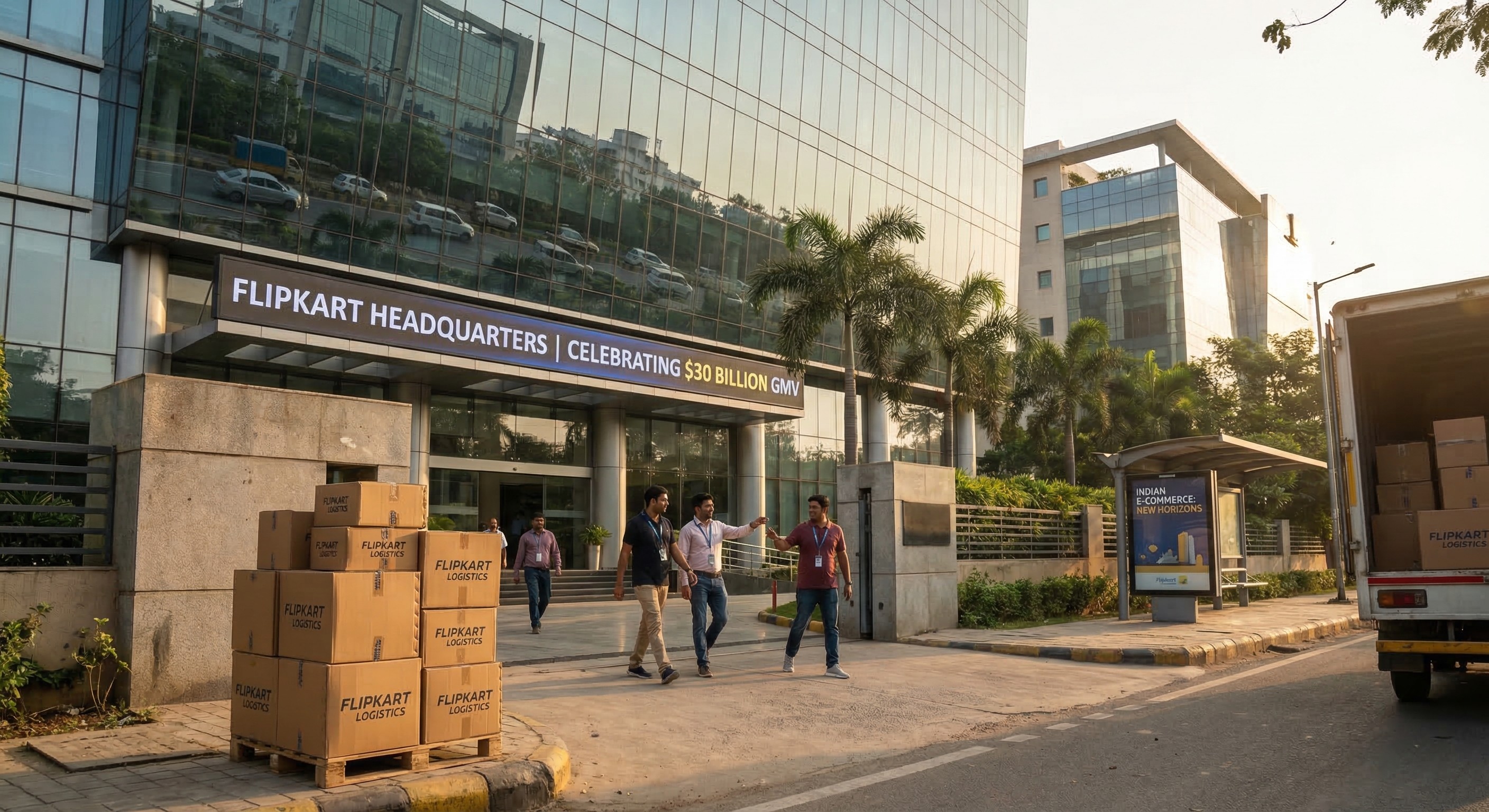
Flipkart's Strategic Headquarters Relocation
In a significant move, Flipkart, the Walmart-backed e-commerce giant, has announced the relocation of its headquarters. This shift comes as the company achieves a remarkable milestone of approximately $30 billion in Gross Merchandise Value (GMV). The decision to relocate is seen as a strategic step to accommodate the company's rapid growth and expansion in the competitive Indian e-commerce market.
Understanding Flipkart's Growth Trajectory
Flipkart's journey from a small startup to a major player in the e-commerce industry is a testament to its strategic planning and execution. Founded in 2007, the company has consistently expanded its market presence, leveraging its understanding of local consumer behavior and preferences. With the backing of Walmart, which acquired a majority stake in 2018, Flipkart has been able to enhance its infrastructure, technology, and supply chain capabilities, contributing to its impressive GMV growth.
The Implications of a $30 Billion GMV
Achieving a GMV of $30 billion is a significant indicator of Flipkart's market dominance and operational efficiency. GMV, a key metric in the e-commerce industry, represents the total value of merchandise sold over a certain period. This milestone not only highlights Flipkart's robust sales performance but also underscores its ability to capture a substantial share of the Indian e-commerce market, which is one of the fastest-growing in the world.
Impact on the Indian E-commerce Landscape
Flipkart's success story is reflective of the broader growth trends within the Indian e-commerce sector. The industry has witnessed exponential growth, driven by increasing internet penetration, a burgeoning middle class, and a shift in consumer preferences towards online shopping. Flipkart's ability to achieve such high GMV figures is indicative of the potential for further growth in the sector, as more consumers embrace digital marketplaces.
Future Outlook and Challenges
While Flipkart's relocation and GMV milestone are significant achievements, the company faces several challenges ahead. The Indian e-commerce market is highly competitive, with players like Amazon and Reliance Retail vying for market share. Additionally, regulatory changes and evolving consumer demands require continuous innovation and adaptation. As Flipkart continues to expand, maintaining its competitive edge will be crucial in sustaining its growth trajectory.