
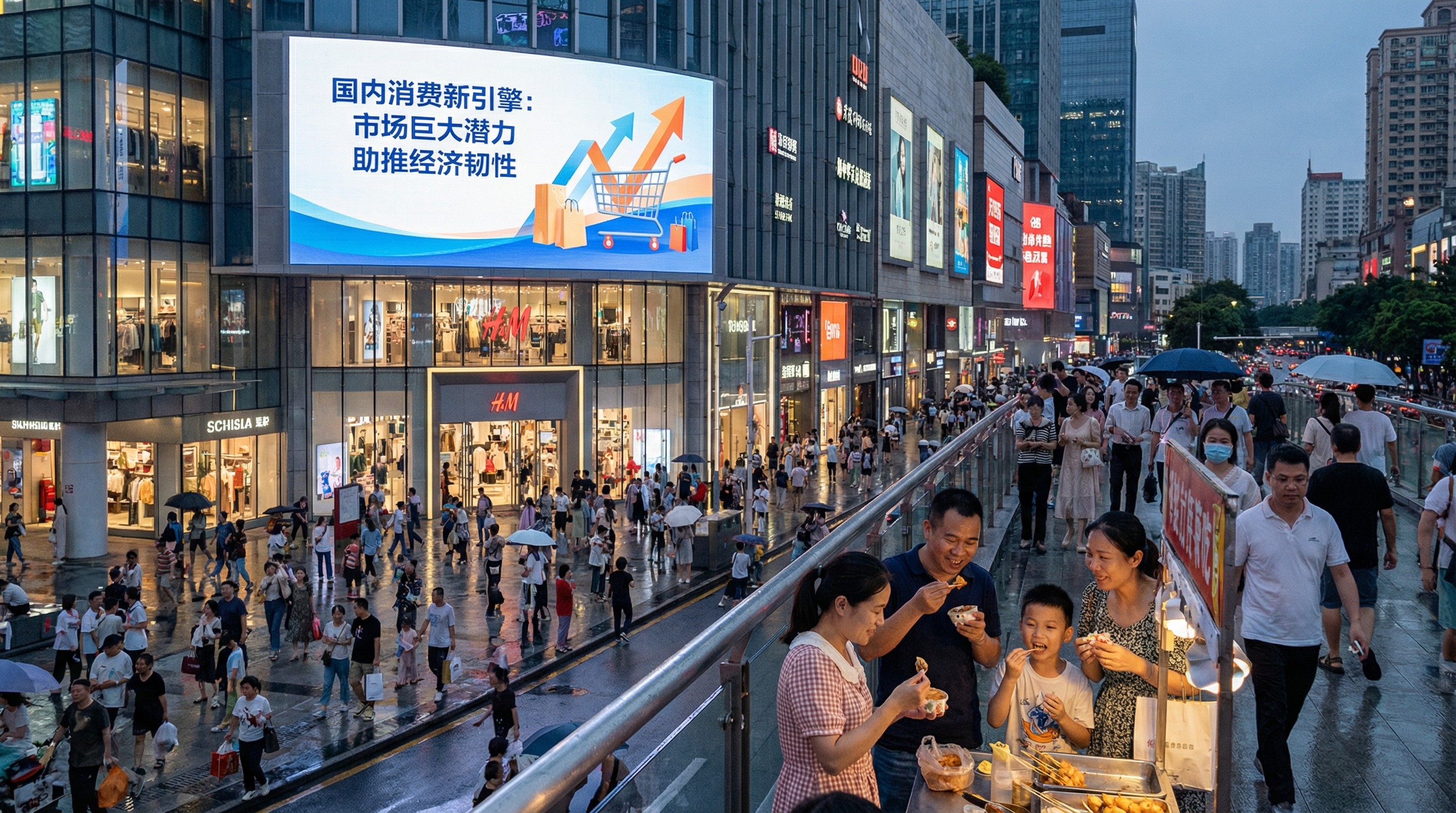
China's Economic Pivot to Domestic Demand
In a strategic shift aimed at bolstering economic resilience, Chinese President Xi Jinping has emphasized the importance of domestic demand as the central pillar of the country's economic growth. This approach, articulated in a recent publication, underscores China's intention to exploit the advantages of its vast market size to drive economic progress.
Leveraging a Super-Large-Scale Market
China's economic strategy leverages its super-large-scale market to stimulate growth. As the world's second-largest economy, China's domestic market offers a substantial consumer base that can potentially offset external economic uncertainties. By focusing on internal consumption, China aims to reduce its reliance on exports and external markets, which have been volatile due to global trade tensions and economic slowdowns.
Implications for Global Trade Dynamics
This shift towards domestic demand has significant implications for global trade dynamics. As China reduces its dependence on exports, other economies may experience changes in trade patterns. Countries heavily reliant on exporting goods to China might need to diversify their markets or adjust their economic strategies accordingly. Furthermore, this move could influence global supply chains, prompting businesses to reassess their production and distribution models.
Challenges and Opportunities
While the focus on domestic demand presents opportunities for economic stability, it also poses challenges. Increasing domestic consumption requires enhancing consumer confidence and spending power, which may involve policy adjustments and economic reforms. Additionally, China must balance this strategy with its ongoing efforts to transition to a more sustainable and innovation-driven economy.
Outlook: A Balanced Growth Approach
Looking ahead, China's emphasis on domestic demand is likely to be a key component of its broader economic strategy. By fostering a balanced growth approach that integrates domestic consumption with sustainable development, China aims to create a more resilient and self-sufficient economy. This strategy not only supports China's long-term economic goals but also positions it as a stabilizing force in the global economy amid ongoing uncertainties.