
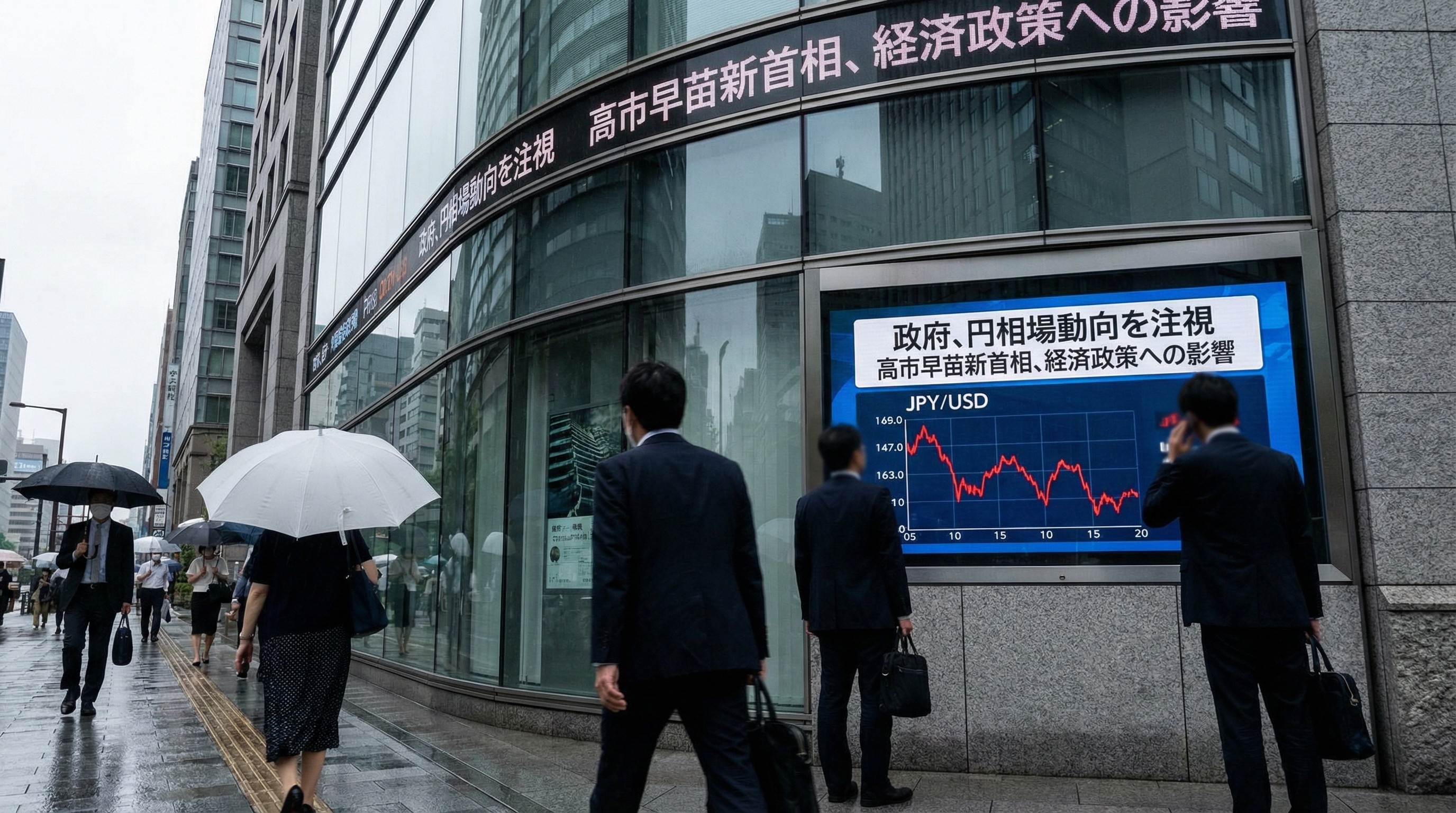
Japan's Economic Landscape Post-Election
Following the recent electoral victory of Prime Minister Sanae Takaichi, Japan finds itself at a crucial economic juncture. The election result has introduced a new phase of political stability, but it has also sparked renewed fluctuations in the foreign exchange market, particularly affecting the yen. This has prompted Japan's top currency official to issue a statement underscoring the government's vigilance in monitoring these developments.
Yen Under Renewed Pressure
In the wake of Takaichi's win, the yen experienced immediate pressure, reflecting market uncertainty about the new administration's economic policies. The yen's performance is a critical indicator for Japan's economy, influencing everything from export competitiveness to inflation rates. The government's response highlights the importance of maintaining stability in the currency markets to support economic growth and investor confidence.
Government's Strategic Monitoring
Japan's currency officials have reiterated their commitment to closely observing the foreign exchange markets. This vigilance is crucial as any significant fluctuations in the yen could have far-reaching implications for Japan's economy, especially considering its heavy reliance on exports. A weaker yen can boost exports by making Japanese goods cheaper abroad, but it can also increase the cost of imports, impacting domestic inflation and purchasing power.
Implications for Japan's Economic Policy
The yen's volatility comes at a time when Japan is navigating complex economic challenges, including an aging population and the need for technological innovation. Prime Minister Takaichi's administration is expected to address these issues while ensuring economic stability. The government's proactive stance on currency monitoring could signal a broader commitment to maintaining economic resilience in the face of global uncertainties.
Outlook for Japan's Financial Markets
As Japan moves forward under new leadership, the focus will likely remain on balancing economic growth with stability. The government's ongoing scrutiny of the yen's movements will be a key factor in shaping future economic policies. Investors and analysts will be closely watching how these dynamics play out, as they could influence Japan's position in the global economy and its ability to attract foreign investment.