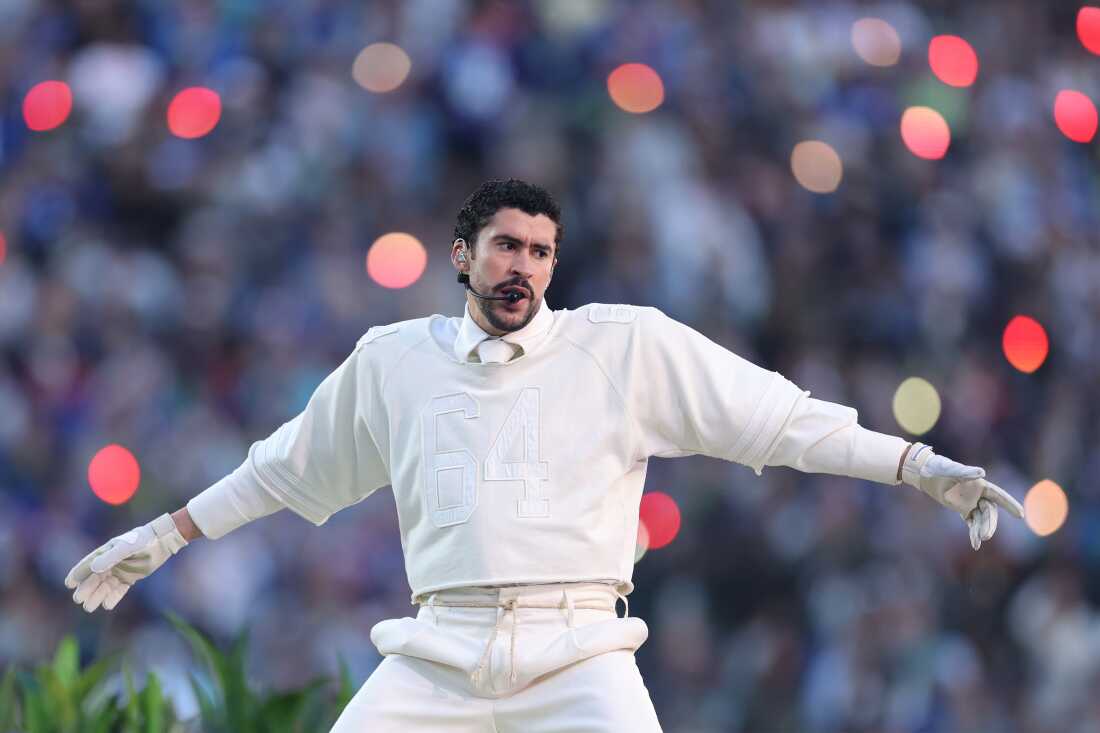
When political leaders and media voices attacked Bad Bunny over his Super Bowl halftime show, you saw more than a music debate. You saw a culture fight spill onto one of the biggest stages in the country. Critics focused on his Spanish-language performance and his past comments on immigration and Puerto Rico.
The backlash did not hurt his career; it increased attention, strengthened fan loyalty, and expanded his global reach. As outrage spread across cable news and social media, more people streamed his music, searched his name, and followed the story.
You can trace how the controversy started, who pushed it, and how Bad Bunny’s own political voice shaped the reaction. You will also see how fans, the NFL, and online platforms turned a halftime show into a larger moment about culture, identity, and influence.
Origins of the Super Bowl Halftime Show Controversy
The controversy began as soon as the NFL confirmed Bad Bunny as the headliner for the 2026 Super Bowl Halftime Show at Levi’s Stadium. Political leaders, media figures, and fans quickly turned the booking into a national debate about culture, language, and immigration.
Announcement and Immediate Reactions
When the NFL announced that Bad Bunny, born Benito Antonio Martínez Ocasio, would headline the 2026 Super Bowl Halftime Show, you saw instant reaction across social media and cable news.
Supporters praised the choice. They pointed out that he is one of the most streamed artists in the world and the first solo Latin artist to lead a Super Bowl halftime performance. Many viewed the booking as a milestone for Latino representation on one of the largest TV stages in the United States.
Critics responded just as fast. Some conservative voices called the decision political. Others argued the Super Bowl halftime show should feature an artist with what they described as broader appeal.
The NFL defended its choice. League officials said they selected Bad Bunny for his global reach and his ability to bring people together through music at Levi’s Stadium.
Political Backlash Timeline
The backlash grew as political figures weighed in. Former President Donald Trump criticized the selection and said he would skip the game. Other conservative leaders labeled the choice a mistake.
You can trace the tension to Bad Bunny’s public statements. He has criticized immigration enforcement policies and voiced support for Democratic candidates in past elections. At a recent awards show, he spoke out against ICE, which added fuel to the debate ahead of the 2026 Super Bowl halftime show.
Some conservative groups organized counterprogramming events. A petition calling for a different halftime performer gathered over 100,000 signatures.
At the same time, reports suggested immigration enforcement would increase its presence around major events, including the Super Bowl. That claim intensified online arguments about whether the halftime show had become a political platform.
Cultural and Linguistic Debates
Language became a central issue. Bad Bunny performs mostly in Spanish, and you saw critics question whether a Spanish-language set fit the Super Bowl halftime tradition.
Supporters rejected that claim. They argued that Latino culture has long shaped American music, from hip-hop to pop. They also noted that the Super Bowl halftime show has featured artists who spotlight Black history, social justice, and other cultural themes.
During his performance at Levi’s Stadium, Bad Bunny included strong visual ties to Puerto Rico and Latin identity. Some viewers viewed those elements as political. Others saw them as cultural expression.
The debate showed how the Super Bowl halftime stage can reflect broader tensions in U.S. culture. In this case, language, identity, and national politics collided around one performer.
Key Figures and Political Players in the Backlash
Several high-profile conservatives turned Bad Bunny’s halftime show into a political flashpoint. You can trace the backlash from former President Donald Trump to online influencers, cable hosts, and organized counter-events that aimed to challenge the NFL’s choice.
Donald Trump and the Trump Administration’s Criticism
Donald Trump gave the controversy national weight. In an interview on Newsmax, he called the NFL’s decision “absolutely ridiculous” and said he did not know who Bad Bunny was.
His comments focused less on music and more on culture and politics. Critics in his orbit framed the Spanish-language performance and Bad Bunny’s past immigration remarks as signs of political bias.
Members of the Trump administration added to that message. Homeland Security Secretary Kristi Noem said ICE would be “all over” the Super Bowl to enforce the law. Former Trump adviser Corey Lewandowski also warned that immigration enforcement would be active.
These statements tied a halftime show to federal policy. You saw a music event turn into a debate about immigration, national identity, and public safety.
MAGA Influencers and Conservative Media
Online influencers pushed the backlash further. Benny Johnson, a MAGA-aligned commentator, criticized the NFL on social media and pointed to Bad Bunny’s lack of English-language songs and past comments about ICE.
Some conservative hosts on Fox News and other outlets questioned the league’s decision. Coverage often framed the show as part of a larger cultural shift.
At the same time, not all right-leaning voices agreed. After Trump weighed in, some conservative commentators softened their tone or defended the NFL’s right to choose a global star.
You also saw reactions from figures connected to Turning Point USA, the group founded by Charlie Kirk. Their network helped amplify calls for a more “traditional” alternative, turning criticism into organized activism rather than just online posts.
Alternative Halftime Shows and Petitions
Opponents did more than post complaints. Turning Point USA launched an “All-American Halftime Show” as a counterprogram during the Super Bowl broadcast.
The group promoted artists linked to conservative audiences. Kid Rock headlined the event, with support from country acts such as Brantley Gilbert. Promoters framed it as a celebration of “faith, family, and freedom.”
At the same time, a petition to replace Bad Bunny gained tens of thousands of signatures. Organizers urged the NFL to book George Strait instead, arguing the halftime show should reflect what they called traditional American values.
These efforts showed clear goals:
Replace or overshadow the official performance
Pressure the NFL through public campaigns
Offer a parallel cultural event
You could see how a music booking turned into a coordinated political response, backed by recognizable names and organized platforms.
Bad Bunny’s Political Expression and Advocacy
Bad Bunny uses his platform to speak on immigration, Puerto Rico’s political status, and social justice. You see his views not only in interviews, but also in tours, award shows, and major live events.
Opposition to ICE Policies
Bad Bunny has openly criticized Immigration and Customs Enforcement (ICE) and its enforcement tactics. He has spoken against ICE raids and the fear they create in immigrant communities.
During a recent tour cycle, reports noted that he avoided adding some U.S. stops out of concern that fans could face ICE raids. That decision tied his business choices to his political stance. He framed the issue as one of safety and dignity for Latino families.
Former President Donald Trump and some conservative commentators pointed to these anti-ICE comments as proof of an anti-Trump agenda. Trump said he did not know who Bad Bunny was and called the NFL’s choice of halftime performer “ridiculous.” Critics argued that his views clashed with what they see as traditional American values.
Supporters countered that Puerto Rico is part of the United States and that you cannot separate Latino identity from national culture. His stance placed immigration policy at the center of his public image.